
How Vietnam real estate bias and champions weights on inflation for all?
The Wall of Truth
Vietnam looks like a boom economy. The cranes are working. The expat bars are full. GDP numbers keep surprising to the upside. But your Vietnamese colleague who smiles in the office may have been awake since 2:00 AM, doing math that terrifies them. Here is what the headlines don't tell you — and why it matters for everyone living here.
The Wall
of Truth
Vietnam looks like a boom economy. The cranes are working. The expat bars are full. GDP numbers keep surprising to the upside. But your Vietnamese colleague who smiles in the office may have been awake since 2:00 AM, doing math that terrifies them. Here is what the headlines don't tell you — and why it matters for everyone living here.
What Expats See vs. What's Actually Happening
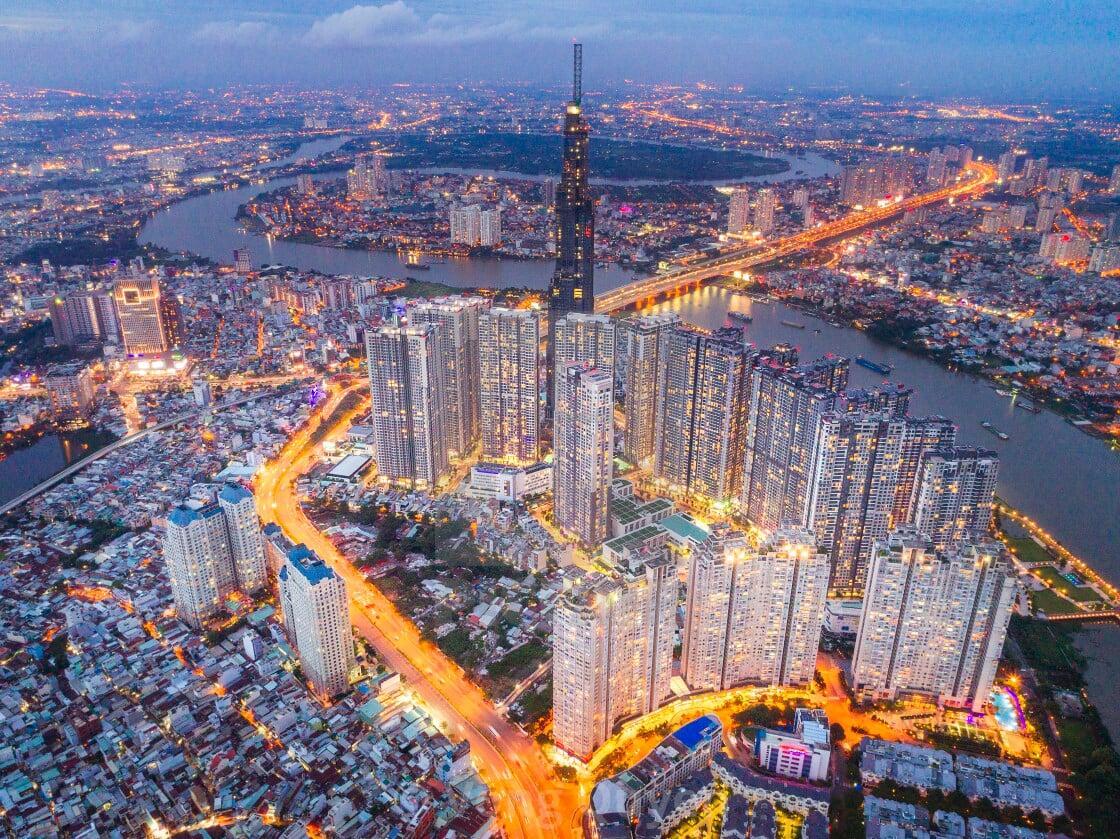
If you arrived in Vietnam in the last decade, you were handed a particular story: a young, dynamic economy with double-digit property appreciation, a manufacturing boom, and an aspirational middle class that was unstoppable. Saigon's skyline seemed to confirm it every morning.
The Vietnamese economy genuinely did produce extraordinary results for a generation. Champions emerged — household names whose ambition matched the country's appetite for modernity. The Vin- universe. The steel barons. The property developers who turned rice paddies into skylines. Expats watched this and admired it, sometimes invested in it, often worked alongside the people it minted.
But 2026 is the year that separates the paper story from the cash reality. And if you don't understand what Vietnamese families are experiencing right now, you are living alongside a crisis you cannot see.
Property prices only ever go up — Vietnamese people understand real estate, it's cultural wisdom.
GDP growth of 6–7% means everyone is getting richer together.
The big conglomerates are national champions proving the model works.
Interest rates are a government lever — they'll manage it fine.
A 10 billion VND shophouse yields 2% rent while the loan costs 14% — a 12% monthly bleed.
Growth figures mask a split: savers are thriving, borrowers are drowning.
The Vạn Thịnh Phát/SCB scandal revealed those champions were built on cross-ownership and shell companies funneling savings into illiquid land.
Mortgage rates have reset from 7% promotional rates to 14–16%. For a ₫2 billion loan, that's ₫80 million in extra interest per year — a full month's salary, gone.
₫4.5 Quadrillion in Stagnant Concrete
Vietnam's financial system has a circulatory problem. Approximately 4.5 quadrillion VND — close to 25% of the country's total credit — is locked in real estate assets that cannot be sold, cannot generate yield, and cannot be converted to cash without catastrophic losses.
This is the "Blood Clot" that Vietnamese analysts now speak of openly. It is the consequence of two decades in which property was treated not as housing but as the only credible savings vehicle — because, in fairness, it often was. Banks rewarded it with cheap credit. Developers rewarded it with ever-rising paper values. The state tolerated it because the numbers looked good.
"The bank is the stadium owner. Regardless of which team wins or loses on the field, the stadium owner always gets paid their rent."
— Vietnam 2026 Rebalancing AnalysisWhen cheap money era of 2021–2022 ended — and it ended sharply — two kinds of Vietnamese households emerged. The disciplined saver with ₫1.5 billion in deposits now earns roughly ₫130 million per year at current rates. Risk-free. The over-leveraged buyer of the same period now faces rates reset to 14–16%, bleeding cash every month while the asset sits frozen.
The Saver — 2026
Passive income per year on ₫1.5B deposit at 8–9%. Enough to live comfortably without working.
The Borrower — 2026
Extra annual interest cost on a ₫2B mortgage after the rate reset from 7% to 14–16%. One full month's salary, every year, permanently.
Your Vietnamese staff, landlords, and business partners are not a monolith. Some are now genuinely passive-income wealthy. Others are, in the clinical financial sense, insolvent — holding assets worth more on paper than any buyer will pay, while servicing debt at rates that consume their income. The stress between these two groups is invisible in casual social settings and explosive in Vietnamese family dynamics right now.
Getting Old Before Getting Rich
The financial crisis is unfolding against a demographic backdrop that makes it worse and longer-lasting. Vietnam's population story — the famous "demographic dividend" of a young, cheap, plentiful workforce that made it Asia's newest factory floor — officially ended in 2025.
The numbers behind that shift are striking. Vietnam's national fertility rate has dropped to 1.91, well below replacement level. In Ho Chi Minh City specifically, it has reached 1.39 — territory that urban planners classify as a demographic emergency.
HCMC Fertility Rate
Record low. When an apartment costs 20 years of salary, a second child becomes an unaffordable calculation, not a family preference.
End of Dividend
Vietnam's demographic dividend officially closed. 2026 is Year One of the aging transition — with the financial infrastructure for an aging society still largely unbuilt.
R&D Spend / GDP
Vietnam's research investment is far below the 2% target set for 2030. Moving up the value chain requires science the country isn't yet funding at scale.
The strategic problem is simple to state and very hard to solve: Vietnam needs to reach "high-income" status — roughly $14,000 per capita — before its workforce shrinks and its pension obligations grow. Realistic projections put per-capita GDP at around $6,200 by 2030. The government target is $8,500. High-income status requires something close to a miracle, and Vietnam has fewer years than people realize to achieve it.
For the expat community, this creates a specific context: the Vietnamese professionals you work with are navigating a country that is rebalancing its entire economic model while simultaneously aging faster than its institutions can absorb. The pressure is structural, generational, and not going away.
The $2 Economy and Why It Must Change
There is a reason why Vietnam's export numbers look impressive and yet Vietnamese incomes remain modest. For every $10 shirt exported, Vietnam captures approximately $2 in value. The remaining $8 goes to imported materials, foreign technology, and foreign-brand ownership.
Samsung alone accounts for nearly a fifth of Vietnam's total exports. This is extraordinary in one sense — it represents genuine integration into global supply chains. In another sense, it means a single Korean board decision can materially alter Vietnam's trade balance. That is not resilience; it is sophisticated dependency.
The "Lewis Turning Point" — the moment when cheap rural labor supply runs out and wages must rise — is now underway. That is good for Vietnamese workers in the short term. It is bad for the low-cost assembly model that attracted the foreign direct investment in the first place. Vietnam must move up the value chain, or it will be undercut by cheaper neighbors or by automation.
Only 10% of Vietnam's population holds a university degree. Moving beyond assembly work into higher-value manufacturing, software, or services requires an education system that is only now beginning to scale toward what the economy actually needs. This is not a failure — it's the normal arc of development — but the clock is ticking faster than the graduation rates.
What This Means if You Live Here
None of this is cause for alarm about Vietnam's trajectory as a country. This is a society working through a structural transition that every developing economy eventually faces. Vietnam's institutional response — the Q1 2026 credit cap deliberately starving land speculation to push capital toward manufacturing — shows a government that understands the diagnosis, even if the cure is painful.
But for expats, especially those who arrived during the boom years and built their mental model of Vietnam then, several things are worth understanding clearly:
Property Is Not the Safe Haven It Appeared
The assumption that Vietnamese real estate always appreciates — held by expats and Vietnamese families alike — is being tested at the worst possible moment: high rates, frozen liquidity, and a generation of over-leveraged buyers who cannot exit. If a Vietnamese colleague or partner is under financial pressure you don't understand, this is often why.
The "Champions" Carried Hidden Risk
The conglomerates that looked like national success stories were, in some cases, elaborate financial constructions relying on cross-ownership, rolling debt, and real estate collateral. The Vạn Thịnh Phát/SCB case was not an anomaly. It was a reveal. Vietnam's corporate landscape now requires a different kind of due diligence than the boom years warranted.
Your Health Coverage Needs to Be Cash-Based
In a country where household balance sheets are under maximum stress, the Vietnamese hospitals and clinics that serve expats are pricing accordingly. "Paper wealth" doesn't pay an emergency bill. International health insurance that settles directly with hospitals is not a luxury here — it is the expat equivalent of the saver's cash buffer.
The People Around You Are Under Real Pressure
Cultural norms in Vietnam mean that financial stress is rarely discussed openly, especially with foreign colleagues or employers. But the 2:00 AM insomnia is real, the mortgage calculation is real, and the gap between the salary paid and the debt being serviced is real for a significant portion of the people you work with every day.
Protecting What's Real in an Economy of Paper Wealth
InsuranceinAsia.com has been working with expats across Vietnam and ASEAN since 1994. In a year when liquidity is the defining metric of survival, international health, life, and non-life insurance is the cash reserve you build before you need it.
Get a Free Insurance ReviewExplore Coverage Options